

Episode
37
Charlotte Pearce, Inkpact, on Why Analogue Is Winning in Retail Marketing

Summary

Transcript

Guest Details

Watch on YouTube
Charlotte Pearce runs Inkpact, which sends physical mail for retail brands, triggered straight from their CRM: handwritten notes, programmatic postcards, lookbooks, catalogues, gifting and store invitations, written by a network of scribes across the UK and US. Clients include Boden, OKA, Space NK and Victoria Beckham. She joins host Jamie Hamer to explain why the slowest medium in marketing is growing while everything else automates.
The evidence is specific. OKA tested a welcome note with an offer code against one without, and the version without won on revenue, not just profit, because a discount makes a welcome read as marketing. Anniversary and celebration campaigns with no call to action have returned 56 times and, at their highest, 200 times. Johnnie Boden apologised to customers in handwriting during a downturn. Her formula for why any of it works is data plus craft, and her counter-example is the White Company sending a catalogue of white clothes to a customer who only wears black.
The second half covers what breaks when a business depends on real people, why a crowd of writers scales better than writing robots, and why Inkpact's own AI-scripted product grew handwritten volume rather than replacing it. It closes on reciprocity, giving before you ask, and the customer who tested her note by smudging it with champagne.

Jamie Hamer
Host, Retail is Detail Podcast

Helen Murphy, Opply, on Why DTC Brands Miss 80% of the Market
Opply's Helen Murphy on why shelf still beats screen, what retail buyers actually decide on, and the unticked box that stopped deliveries. Hear her thinking.
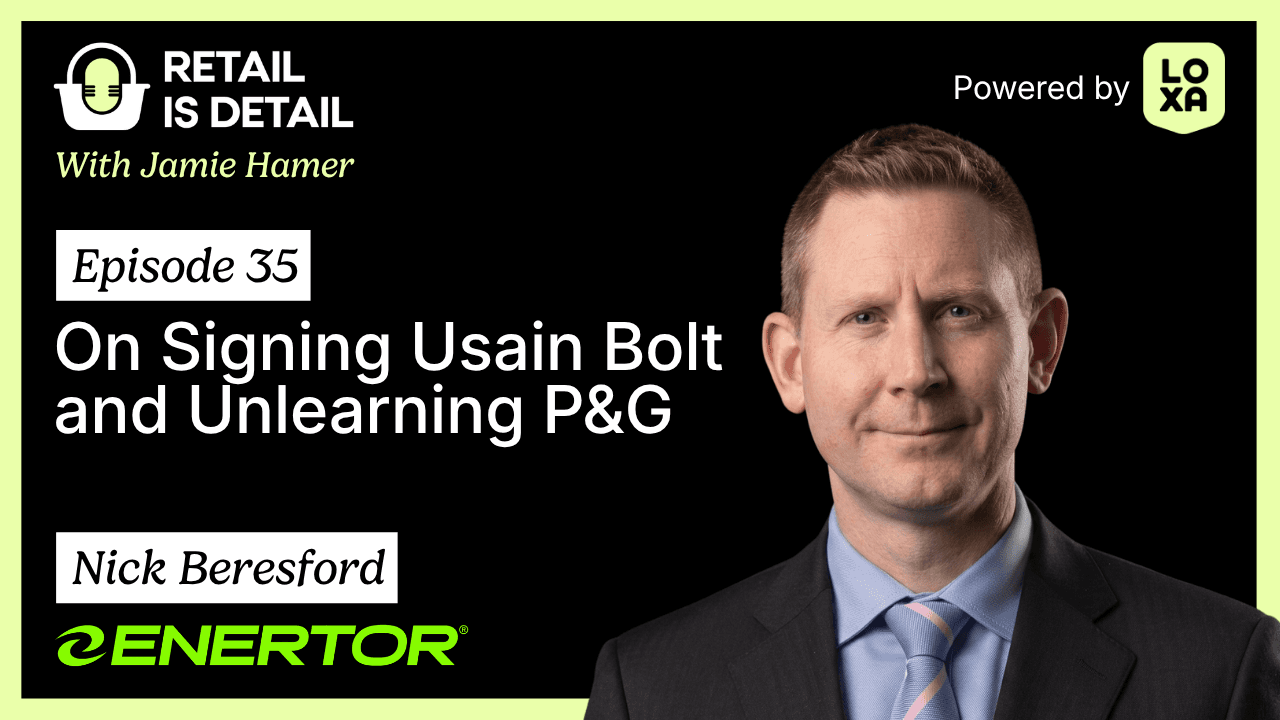
Nick Beresford, Enertor, on Signing Usain Bolt and Unlearning P&G
Nick Beresford left P&G to sell insoles from Ipswich, and within a year Usain Bolt was on the shareholders' register. He explains the launch that nearly killed Enertor, and what he had to unlearn.

Alex Ayin, Tomorrow's Potential, on the Critical Non-Essentials That Win Retail
Alex Ayin helped build Social Chain and scale THG before founding Tomorrow's Potential. He argues the critical non-essentials, the trivial-looking moves business school ignores, decide which retailers end up number one.